Venues and destinations
A Rain Plan for an Outdoor Wedding in Sri Lanka
By MyWeddingDayUpdated
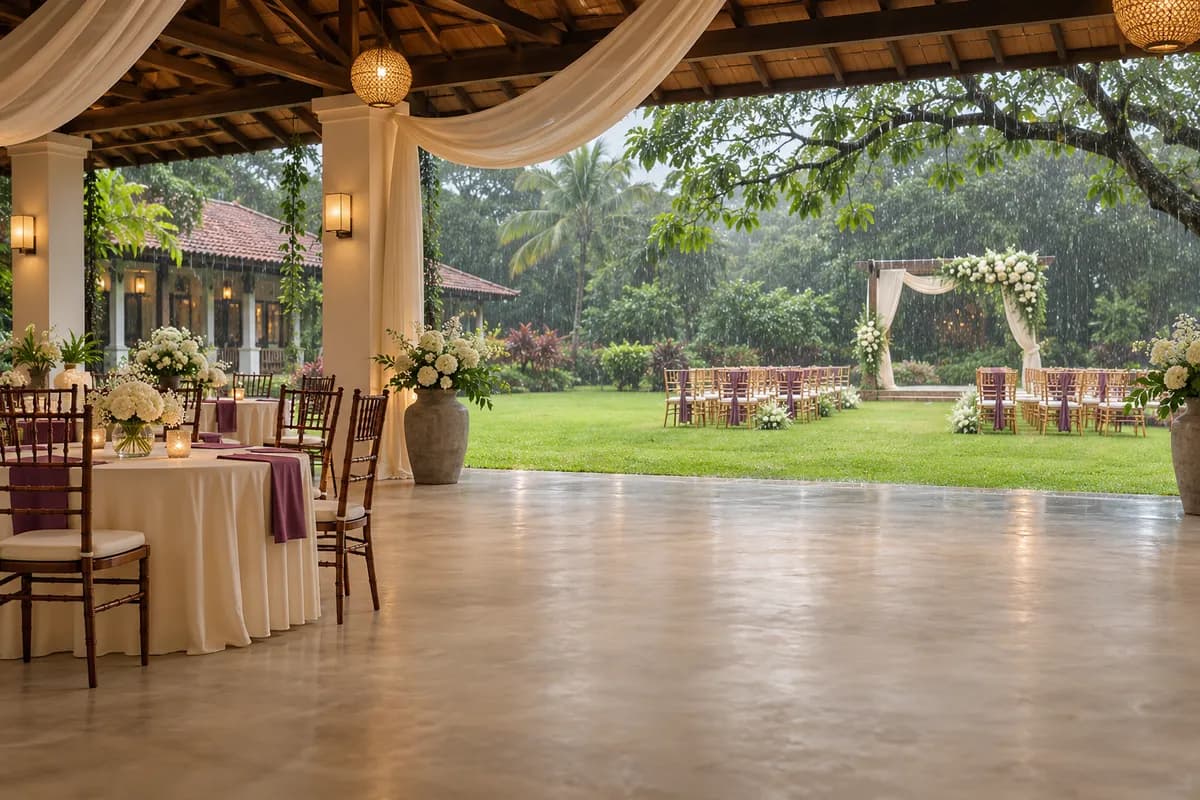
A rain plan works when everyone knows which space to use and when to switch. Walk through the indoor option with your venue and suppliers during planning. The backup has to hold your guests and support the ceremony and meal you intend to serve.
Check what fits under cover
Ask the venue to draw the indoor table and ceremony layout, including clear walkways. Check that sound and decor can be set up there and that toilets are reachable. If you are relying on a temporary covered structure, ask the provider and venue to agree how weather conditions affect its use.
Walk guest arrival from the drop-off to the sheltered space. Identify any slopes or surfaces that become difficult when wet. Ask who provides umbrellas or staff direction, and prepare an indoor spot for portraits.
Set a deadline for switching layouts
Ask venue and decor teams for the latest time they can finish an indoor setup. Give one person authority to make the call in consultation with the venue. Write the cutoff and who will be notified into the day's run sheet.
Prepare the message before the day
Draft a short update with the new entrance or room, arrival time and contact number. Keep the guest message ready and send it if the decision changes their instructions. Place someone at the original arrival point if guests may have already left home.
Try the rain plan while the weather is good
Choose a scenario in which the venue decides to move the ceremony inside ninety minutes before guest arrival. Ask the setup lead to say where furniture goes, the sound team to say where power and microphones are available and the photographer to identify a portrait spot. Ask the venue to demonstrate the accessible guest route in the wet layout. Confirm whether the draft plan fits the whole party with space to move and whether guests already travelling will see the new entrance.
Ask the family contact to write the exact message that would go out. Give it the room name, corrected direction, unchanged time if applicable and a number for questions. Photograph the sign location or walk the route before finalising. Write down the latest time at which staff can make the switch safely and the two people who will confirm it. Revisit that decision window when the final guest count changes.
Decide when and how to move under cover
Ask the venue which indoor layout is guaranteed and how it accommodates the planned guest count, service and ceremony. Walk both routes along with the people responsible for setup, sound and guest arrivals. Check what equipment can move, what needs to be duplicated and which access paths remain comfortable when wet. Where a temporary structure is proposed, ask the venue and provider how suitability is assessed and who makes the decision about using it.
Give the switch a real deadline. If setup staff need an hour to move furniture, attach that time to the latest decision the venue accepts. Put the deadline in the run sheet beside the name and phone number of the person who can approve the move with the venue. Decide how the team will hear about it quickly. A venue operations lead might alert catering and sound while a family contact updates arrivals and drivers. Check whether the backup affects portrait locations or anyone who relies on a specific accessible route.
Prepare two written arrival instructions and confirm the backup room name in advance. When you switch, send the replacement as a new message that plainly names the current entrance and time. Have venue staff post signs or put a person at the original approach when people may already be travelling. Ask the coordinator to check that each affected supplier has read the revised plan. During cleanup, record how the changes worked if you have a second event that can use the same venue or teams.
Plan what happens while the room is being changed
When a venue uses one room for different parts of the celebration, ask it to describe the work that happens between them. Chairs may need to move, tables may need linens and staff may need a place to store equipment that is no longer being used. Ask how many people are assigned and how they will work around sound, lighting or photography. Agree the exact times the room becomes unavailable and when it reopens to guests. Keep its entrances clear until the venue's floor lead confirms that setup is complete.
Choose a place for guests to spend the interval. Walk how they get there from the ceremony and ask where older guests can sit, where children can wait with carers and how the group reaches the toilets while the first room is closed. If the waiting space is outside, make a covered alternative for the same group. Put a short version of the transition on the guest-facing plan and describe where they go, who will guide them and when they should come back.
Give the venue a clear signal for when guests have left and tell the floor team who can adjust the reopening time. Set a backup if setup takes longer, such as extending refreshments or moving a planned photo to the waiting area. Keep the photographer, MC and caterer on the same sequence. After the first walk-through, have someone run the transition with the real route and a rough headcount so you can fix bottlenecks while the layout can still change.
Check the venue approach and send directions people can follow
Use the map pin from a phone the way an arriving guest would. Test the approach from a common road or pickup location, and confirm with the venue which entrance it wants used. If the pin identifies the property but opens a different driveway, add a short landmark and the exact gate or room name. Ask whether the roads and drop-off are suitable for cars, vans and any larger group vehicle. Include a sheltered place to drop off older guests if one is available.
At a location with separate parking or several entrances, write a different route for guests and suppliers. Have a parking or welcome contact ready to answer short calls. Check where someone can wait for a pickup after dark and where a driver can turn without blocking arrivals. If the invitation includes an embedded map, open it from a normal guest phone and make sure it goes to the right entrance. Include brief text directions for someone whose map connection is slow or who is travelling with a driver unfamiliar with the area.
Confirm signs with the venue in advance. Agree their wording, position and how much space they need. Ask someone who has never visited to follow the same instructions without extra hints. When you change an entrance, send the update to the people using it and make sure a helper at the earlier location can redirect anyone working from an old card or forwarded message.
Keep a change record when the plan moves
Start from the last version the venue and suppliers received. Add the date and time of the change, the old instruction, the new instruction and who approved it. Record the impact by event. A different ceremony venue could affect printing, driver pickup, guest access, sound setup and the sequence of family photos. Assign one action owner for each effect and give them a deadline. The person making the decision should know which commitment the change depends on, including any extra cost or time agreed by a supplier.
Use a simple format for outgoing messages. Lead with the affected event and the updated detail. Add who needs to act, what the recipient should confirm and the best number to call if there is a problem. Send only the appropriate information to each audience. The invitation update may carry a new guest entrance and time. The supplier message may need the loading route and sound check slot. Keep vendor pricing and private guest details in the records used by the people who need them.
After sending, ask the person receiving the change to reply with the detail they will use. Confirm the photographer saved the new room, the driver has the new meeting point and the family contact has the current arrival message. Update the guest count or schedule in the planning workspace and archive the old working copy. A small read-back is valuable when reception staff work different shifts or family volunteers step in at short notice. It catches a surprising number of changes before someone arrives at the old location.