Guests and ceremonies
How to Make a Wedding Seating Plan
By MyWeddingDayUpdated
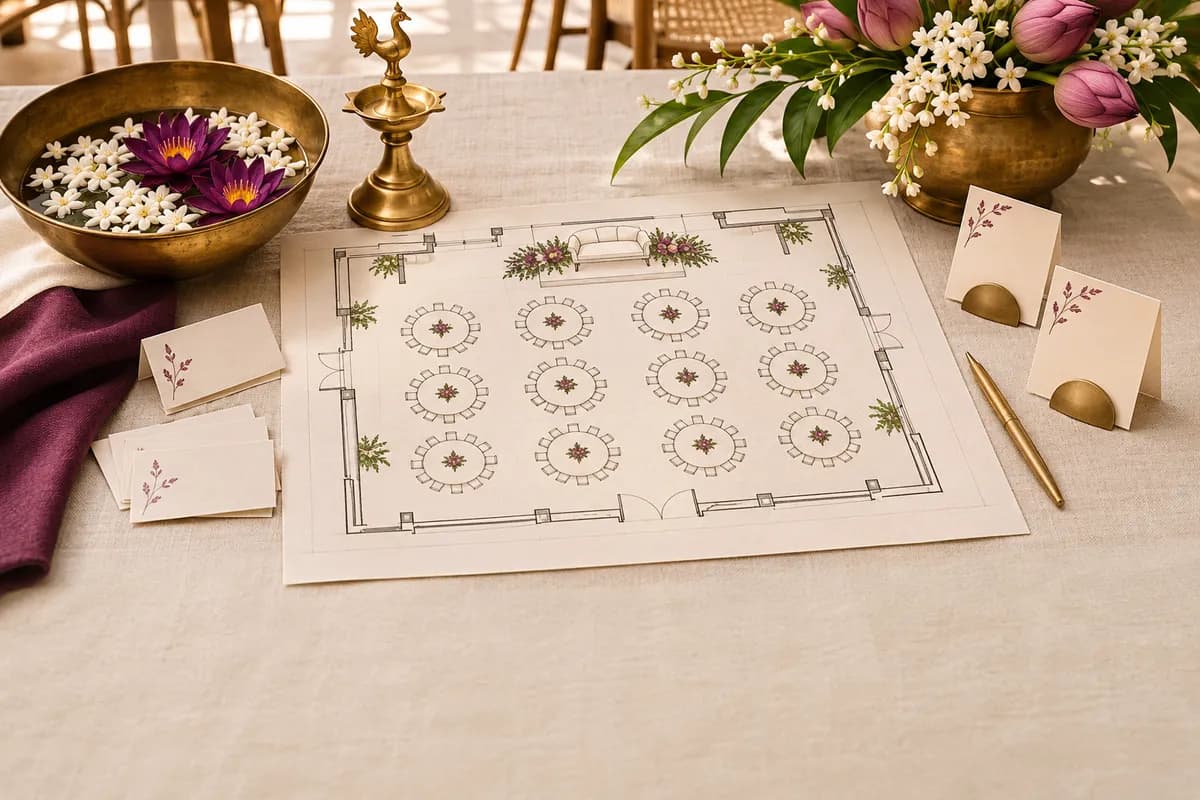
Make your seating plan from the venue's floor plan and confirmed guest list. Before placing people, ask how many guests each table seats comfortably with the chairs and centrepieces you intend to use. A room's advertised guest capacity may assume a different layout.
Map the room before assigning guests
Mark the entrances, clear paths, buffet queue, speakers and dance floor. Check how guests who need step-free access reach their seats, toilets and pickup. Ask families with young children whether they need a high chair or a place for a pram, then check the space with the venue.
Confirm whether the venue needs numbers per table, named place cards or just a layout. For meals requiring special handling, ask the caterer how it will identify the guest discreetly.
Build from groups that need to stay together
Place households, carers and any guests who need help first. Ask both families about sensitive seating choices early. At a table with a spare seat, consider who would know at least one other person and check the headcount again after any reassignment.
Prepare copies for setup and arrival
Give the venue a table-numbered floor plan and the person greeting guests a name-sorted list. Print signage after the final agreed guest count. Keep a short change list and agree who can assign a guest another seat if there is a late change.
Seat a late household without undoing a whole table
A three-person household accepts after the chart is nearly final. First confirm the venue can fit three people and the caterer can feed them under the agreed cutoff terms. Look for seats that let the household sit together or next to someone they know. An empty space beside a table can be unusable if it is needed for service or access. Check with the venue before adding chairs and update the table count on the catering and welcome copies at the same time.
If the only working change moves two households, ask the family contact who knows them to confirm it privately. Consider whether an existing guest needs to remain close to the entrance, companion or service point. Once a change is accepted, record the table number in both the name lookup and floor plan. Tell the person handling signs whether any printed materials need an update. If a board cannot be changed, send the welcome desk the revised list and give them a simple way to guide affected guests.
Test the floor plan as a guest would use it
Ask the venue for the actual tables, chair sizes and service positions included in your booking. Take an entrance-to-seat route and then a seat-to-toilet route. Check what happens when the buffet, emergency exits and photography positions are in use. A floor plan can show a clear line while real chairs or a decoration stand reduces that space. Agree with the venue how to place high chairs and how to seat guests who ask for easier access. Record the accepted capacity of each table before moving people between groups.
Start placing households with the least flexibility. A person who needs a companion should have space for both. A parent with a child may need an easy route out. Think through conversations and sight lines for family tables, and check where music is loud. Move a whole group or ask the person who knows it to help when splitting is necessary. Record a small number of seats you can use for late changes if the venue agrees and there is room to serve them.
Walk the final layout with the person who will direct guests. Check table numbers as they will be visible from the entrance, including where an easel or sign could slow arrivals. Create a plain name-sorted lookup for the welcome desk and a table-numbered plan for room setup. Include the seat counts and any discrete service instructions in the staff copy. Recheck the route after setup so a late change to equipment does not undo the work.
Reconcile attendance, seating and catering counts
Take a snapshot after the final reply date and give it a date and event name. Compare people marked attending with seats assigned and meals ordered. Keep vendor meals, children's meals and high chairs visible in separate fields, then confirm how the venue wants them counted. Review any groups with people arriving at different parts of the celebration. A guest joining for the meal may need a seat even if they missed the ceremony. A performer who needs a meal may be counted by the caterer without appearing on the guest seating chart.
Try a three-column check for a sample event. If there are 122 confirmed guests, 120 seats marked in the room and 126 guest meals requested, ask what explains each difference. The missing seats may be children sitting with their families or a table assignment that was skipped. The four extra meals might be agreed reserve portions. Record each explanation instead of adjusting totals until they happen to agree. Ask the venue which tables can absorb late additions and how meal numbers change when a guest switches categories.
Once the numbers reconcile, make the final handoff by event and version. Send setup staff the table plan, the caterer the counts and the welcome team the name or household lookup it needs. Record changes after that time in one place. Make sure every person using an older copy hears about a change affecting their role, especially when two teams print the plan at different times or take over from earlier shifts.
Check guest access between the vehicle, room and facilities
Ask guests privately what would make the event easier to attend. A person may need a closer drop-off, a seat while waiting, step-free access, a companion or a quieter place during long pauses. Write down the action needed and who will help. Share requests only with people arranging the support. A driver usually needs the pickup instructions and capacity, while a venue contact needs the physical access or seating requirement.
Walk the full route with venue staff, preferably with the same doors and lifts that will be available on the day. Check the surface after rain if it was wet on your visit, the height of steps, evening lighting and where guests can reach toilets. Ask what happens if a lift is unavailable or a scheduled entrance is shared with another event. Work out an alternative with the venue and tell the person receiving guests where it begins. Confirm where anyone needing help can wait under cover while a vehicle is being moved.
Test the directions with a trusted person who has not visited. Send the map pin, entrance description and phone contact and ask them to say where they would get out. Prepare a shorter version for someone who prefers a phone call. Tell the welcome team how to greet guests discreetly and which lead can change a seat or route. At the end of the event, check the pickup position again because lighting, parking and traffic may differ from arrival.
Pass guest meal needs to the caterer accurately
Collect only the information the catering team needs to plan the meal. Ask guests to describe their requirements in their own words. Where there are allergies or questions about preparation, give the organiser and caterer time to discuss what the kitchen can provide and have it confirm the arrangement directly when appropriate. Separate requests for a different menu from concerns that need a discussion about ingredients or handling. Avoid making assurances on the caterer's behalf.
Use a versioned table plan and meal count. The name of the event, table number and designated contact should be the same on the seating copy and catering copy. Ask the venue how staff identify a meal without publicly announcing a person's details. If the kitchen asks for a coded note, explain who reads it and where it appears. Check how changes after the final count are passed through, especially when a guest moves tables or a new number replaces the earlier estimate.
Before guests sit, have the venue lead match the current service instructions to the plan actually laid in the room. If meal details are unclear, staff should know which catering lead can clarify them. Give the attendance owner a way to flag a late guest without sending a full copy of the planning spreadsheet. The aim is to give each team precise information and an agreed path to a person who can resolve a question while the reception is in progress.