Planning and budgets
How to Track Wedding Deposits Without Paying Twice
By MyWeddingDayUpdated
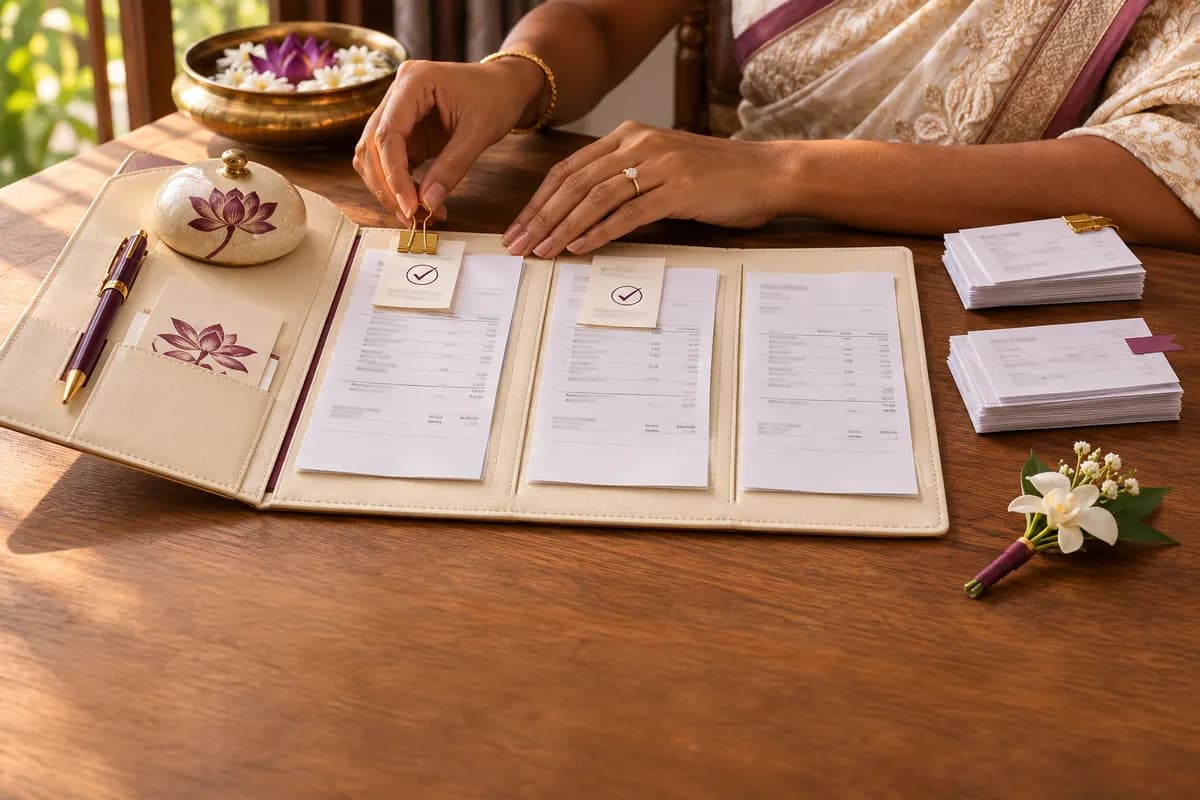
A supplier remembers a deposit, a relative paid it and the receipt is in a different chat. A ledger can settle this before anyone pays the balance. Set it up around the agreement, then record each payment once.
Record which event and invoice each payment covers
With several events, the same photographer might issue two deposits or quote one bundle. Give every booking an event label and an invoice reference. If an aunt pays for the homecoming package and the couple pays for the reception, give the event and amount to the supplier before each transfer. Keep the acknowledgement next to the receipt and let both payers see which invoice has been credited. Avoid treating a promised payment as money the supplier has received.
For example, one print order has LKR 42,000 remaining and an unrelated design order has LKR 25,000 remaining. A receipt for LKR 25,000 sits in both chats. Check the recipient and dated invoice reference, ask the stationer which order it credited and record the response. When a new quote changes one order, preserve the earlier version so the person checking the balance can reconcile the difference.
Use a two-person check on final balances
Give one person responsibility for comparing the supplier's stated balance with the ledger. Give the person paying a list with the due amount, event, payment method and confirmed recipient. Before a transfer on the wedding day, the payer checks the most recent dated entry and asks the supplier for a receipt. Add the acknowledgement to the ledger once. If a supplier claims an additional amount, hand the question to the designated approver with the relevant agreement instead of asking a busy family member to guess.
Put every supplier payment on one ledger
Create a row for each signed booking and list the supplier's trading name, package, agreed total, deposit received, remaining balance and next due date. Keep the actual agreement and receipt with that row. If instalments are scheduled, record each in its own dated entry. Include the named person who approves spending and the person who makes the transfer. The organiser can then tell whether a bill is outstanding, promised by a family member or already paid without reopening multiple chat threads.
For example, a made-up caterer quote of LKR 360,000 with LKR 90,000 paid leaves LKR 270,000. If a confirmed layout change adds LKR 18,000, write the approved new total as LKR 378,000 and keep a reference to the earlier version. The outstanding balance becomes LKR 288,000. Ask the supplier to confirm the change and what payment milestone it affects. Save acknowledgements and receipts using the same supplier and event names so an on-day coordinator can find them quickly.
Agree how the team will confirm payment details. Use a known supplier contact to verify any new account details or a change of payment recipient, and store only the reference and receipt where other planners need access. At the final handover, give the payer a short list of expected balances, accepted payment methods and who signs the receipt. A substitute organiser should be able to match a claimed payment to its invoice without needing to see a private bank message.
Ask for a written comparison of the same service
Give the suppliers the same event schedule, venues, rough guest count and access restrictions. Describe what must be ready at the start time and when equipment can be collected. For services that depend on coverage or unit counts, request those numbers in the quotation itself. A photobooks package can have the same name with different sizes and image counts. A decor hire price can include or exclude the team required to carry items upstairs. Ask the vendor to identify assumptions in its own words.
List the details you care about in rows and each proposal in a column. Compare crew size, duration, delivery, transport, teardown, overtime rates, extra equipment and the person responsible for coordination. Next to any item that is described vaguely, enter a question and date the supplier's reply. If you expect to use an add-on, include it in the working total. Also confirm which items have limits. Extra portraits, a meal tasting or an additional pickup might be possible within a defined time, with a price change after that.
Before confirming the booking, send a summary of the option you are accepting and ask for a written agreement reflecting the same scope and dates. Keep the earlier quote so a later change can be traced. Let the venue know about the agreed arrival, capacity or access conditions that involve its staff. When the people providing adjacent services understand the same plan, they are less likely to duplicate equipment or leave an unassigned task for the family to solve on the day.
Keep a change record when the plan moves
Start from the last version the venue and suppliers received. Add the date and time of the change, the old instruction, the new instruction and who approved it. Record the impact by event. A different ceremony venue could affect printing, driver pickup, guest access, sound setup and the sequence of family photos. Assign one action owner for each effect and give them a deadline. The person making the decision should know which commitment the change depends on, including any extra cost or time agreed by a supplier.
Use a simple format for outgoing messages. Lead with the affected event and the updated detail. Add who needs to act, what the recipient should confirm and the best number to call if there is a problem. Send only the appropriate information to each audience. The invitation update may carry a new guest entrance and time. The supplier message may need the loading route and sound check slot. Keep vendor pricing and private guest details in the records used by the people who need them.
After sending, ask the person receiving the change to reply with the detail they will use. Confirm the photographer saved the new room, the driver has the new meeting point and the family contact has the current arrival message. Update the guest count or schedule in the planning workspace and archive the old working copy. A small read-back is valuable when reception staff work different shifts or family volunteers step in at short notice. It catches a surprising number of changes before someone arrives at the old location.
Prepare a one-page brief for the people doing the work
Put the event date, guest entrance, supplier entrance and room names at the top. List the person responsible for the schedule, the venue floor lead and the person authorised to approve costs. Add a number they will answer on the day and one backup contact for each team. Where the wedding has several events, prepare a short copy for each venue. Use the same naming as the invitation and vendor agreement so a driver can find the event quickly at a hotel or hall serving several groups.
For every task you pass on, write what complete looks like. The person meeting the stationer should check the boxes by table number and hand off the spare cards to the seating lead. The hall contact needs to know which doors open for guests and which stay available for the catering team. A relative bringing ceremony items needs an arrival time and the name of the person who receives them. If a supplier is late, name the team member who calls them and the next person who needs to know.
Run through the brief with one person who has never seen the full plan. Ask them to locate the correct entrance and find the backup contact. Find a mistake to simulate, such as a driver taking guests to the loading area. Ask the reader to explain what they would do without consulting the couple. Fix the brief where they have to guess. Share the final revision electronically and leave a printed copy at the venue if several helpers will rely on it.