Venues and destinations
Planning a Colombo Wedding
By MyWeddingDayUpdated
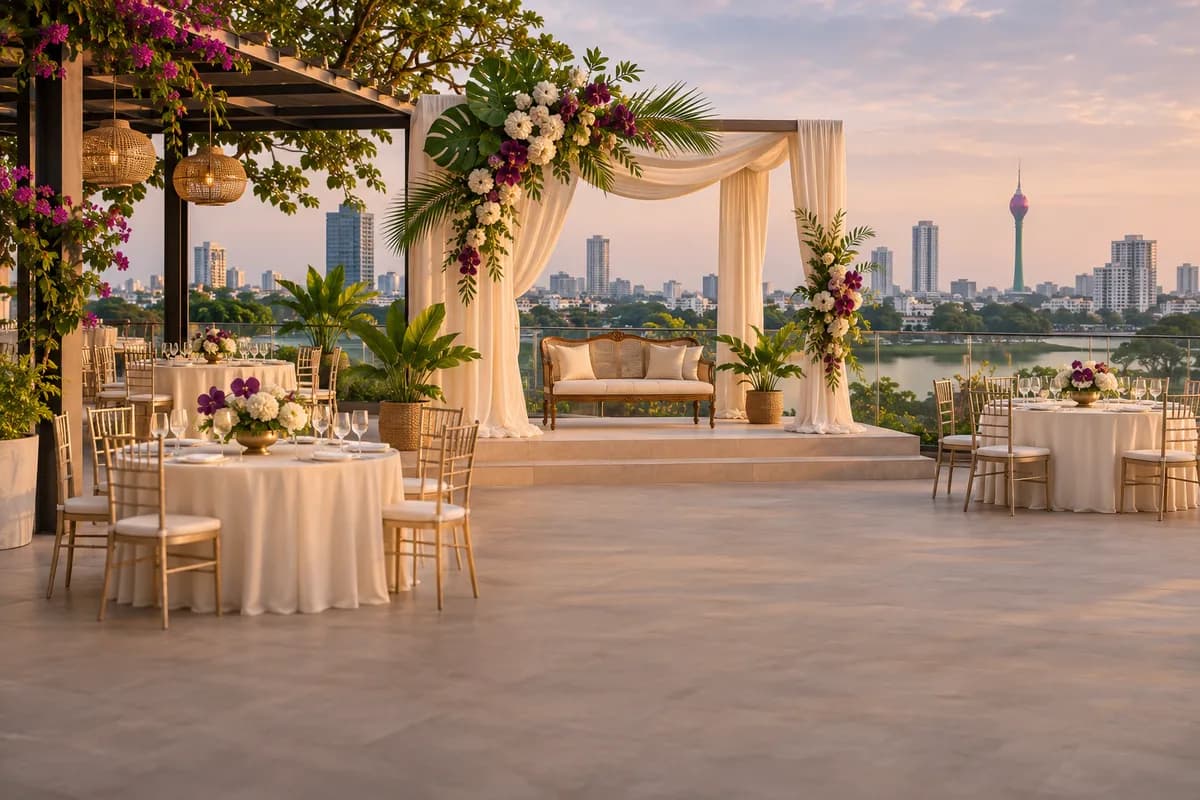
A smooth Colombo wedding depends on how guests and vendors reach the venue as well as what happens inside. Review the whole route from the first arrival to the last pickup. Use the time of day you plan to hold the event when checking travel and access.
Check where guests will arrive
Follow your venue pin from a main road and confirm it points to the correct entrance. At a hotel with several events, put the ballroom name and floor on the invitation. Ask about valet service, parking limits and a sheltered spot for guests who use taxis.
If the ceremony and reception are in different places, work out how close the departure and arrival slots can realistically be. Include time for people to reach their vehicles and leave the first site.
Look at the room and the loading route
Have the venue draw your expected seating, buffet and important sight lines. Ask where photographers can stand and whether lifts, service corridors or loading bays need booking. Confirm when suppliers can start setup and when the room must be cleared.
Give directions people can use at street level
Send a map pin, a short entrance description and a contact for access questions. For visitors staying near the venue, share any group transfer meeting point. Ask a guest who has never been there to open the instructions before you send them to everyone.
Stop guests going to the wrong ballroom
When a property has more than one function room, give each announcement the building entrance, floor and name as the venue displays it. Take a photo of the entrance or ask the venue for a short direction it can confirm. If another wedding is using the lobby, agree where your welcome person can stand and how a separate sign will point to your room. Make sure that staff taking over for the evening know the setup. Give drivers a short description of the drop-off so the hotel name alone is not the last instruction they see.
Where the ceremony and reception use separate city sites, test the trip near the intended departure time before finalising the schedule. Ask the first venue how quickly people can exit and get to vehicles. Allow the next venue enough time to receive guests without blocking supplier access. Record the driver contact and the point at which the MC or venue needs an update about any delay.
Check the venue approach and send directions people can follow
Use the map pin from a phone the way an arriving guest would. Test the approach from a common road or pickup location, and confirm with the venue which entrance it wants used. If the pin identifies the property but opens a different driveway, add a short landmark and the exact gate or room name. Ask whether the roads and drop-off are suitable for cars, vans and any larger group vehicle. Include a sheltered place to drop off older guests if one is available.
At a location with separate parking or several entrances, write a different route for guests and suppliers. Have a parking or welcome contact ready to answer short calls. Check where someone can wait for a pickup after dark and where a driver can turn without blocking arrivals. If the invitation includes an embedded map, open it from a normal guest phone and make sure it goes to the right entrance. Include brief text directions for someone whose map connection is slow or who is travelling with a driver unfamiliar with the area.
Confirm signs with the venue in advance. Agree their wording, position and how much space they need. Ask someone who has never visited to follow the same instructions without extra hints. When you change an entrance, send the update to the people using it and make sure a helper at the earlier location can redirect anyone working from an old card or forwarded message.
Agree the room setup and supplier access schedule
Name the room, date and earliest time each vendor can begin using the property. Confirm what the venue will place before suppliers arrive and which items will be collected after the event. Ask whether the loading entrance is shared with the kitchen or an earlier booking. Check access dimensions, parking restrictions and the route from vehicle to room. If equipment is carried upstairs or through a service lift, ask the supplier to plan for that in its crew and arrival time.
Set out the order in a short timetable. For a ballroom setup, staging and electrical runs may need to happen before chairs are placed. Florals or signs may need to wait until heavy equipment is out of the guest route. Ask the venue how long a final inspection takes and who will give clearance. Point out time windows when guest arrivals should have priority over supplier movement. Put restrictions in the reminders sent to each vendor rather than relying on staff to repeat them at the door.
Before final approval, send the layout and timed plan to the venue floor contact, the setup lead and any vendors sharing space. Have one person resolve conflicts and record changes. On the day, place a contact at the appropriate entrance so drivers can find the right room. If load-in slips, that person can tell the next team to delay or take a different route. Make sure the teardown list covers who takes each item, the final exit time and where any belongings are held for collection.
Plan what happens while the room is being changed
When a venue uses one room for different parts of the celebration, ask it to describe the work that happens between them. Chairs may need to move, tables may need linens and staff may need a place to store equipment that is no longer being used. Ask how many people are assigned and how they will work around sound, lighting or photography. Agree the exact times the room becomes unavailable and when it reopens to guests. Keep its entrances clear until the venue's floor lead confirms that setup is complete.
Choose a place for guests to spend the interval. Walk how they get there from the ceremony and ask where older guests can sit, where children can wait with carers and how the group reaches the toilets while the first room is closed. If the waiting space is outside, make a covered alternative for the same group. Put a short version of the transition on the guest-facing plan and describe where they go, who will guide them and when they should come back.
Give the venue a clear signal for when guests have left and tell the floor team who can adjust the reopening time. Set a backup if setup takes longer, such as extending refreshments or moving a planned photo to the waiting area. Keep the photographer, MC and caterer on the same sequence. After the first walk-through, have someone run the transition with the real route and a rough headcount so you can fix bottlenecks while the layout can still change.
Work backwards from moments that cannot move
Write the event sequence by venue and time. Use starting anchors such as the time the ceremony lead has agreed, a room handover time or when kitchen staff need to start meal service. Ask each supplier for the lead time needed before that anchor, including unloading, walking through the venue and setting up. Convert each requested lead time into a clock time. Where two suppliers need the same entrance or access lift, confirm the order with the venue and assign a person to meet each team.
Take a simple example. If a ceremony starts at 4:30 pm and the family needs to gather at 4:15 pm, decide where the group assembles and who checks that everyone is there. If the photographer needs a team ready at 4:00 pm, allow the lead time for a dressing-room handoff and a walk to the ceremony. Include a practical buffer for transitions and make it clear when that buffer is available. Check the schedule with the driver, photographer and ceremony lead so the same ten minutes are not promised to three separate tasks.
Make a smaller copy for each team that uses it. The family helper needs cues and names. The venue needs room usage, headcounts and access times. The supplier needs the details that affect its booked scope. Give all copies a revision label and update them from the same master. Specify which person can shift a flexible moment and which commitments require approval from the venue or ceremony lead. Write down how that decision is passed to the next person in the sequence.