Venues and destinations
Questions to Ask a Wedding Venue in Sri Lanka
By MyWeddingDayUpdated
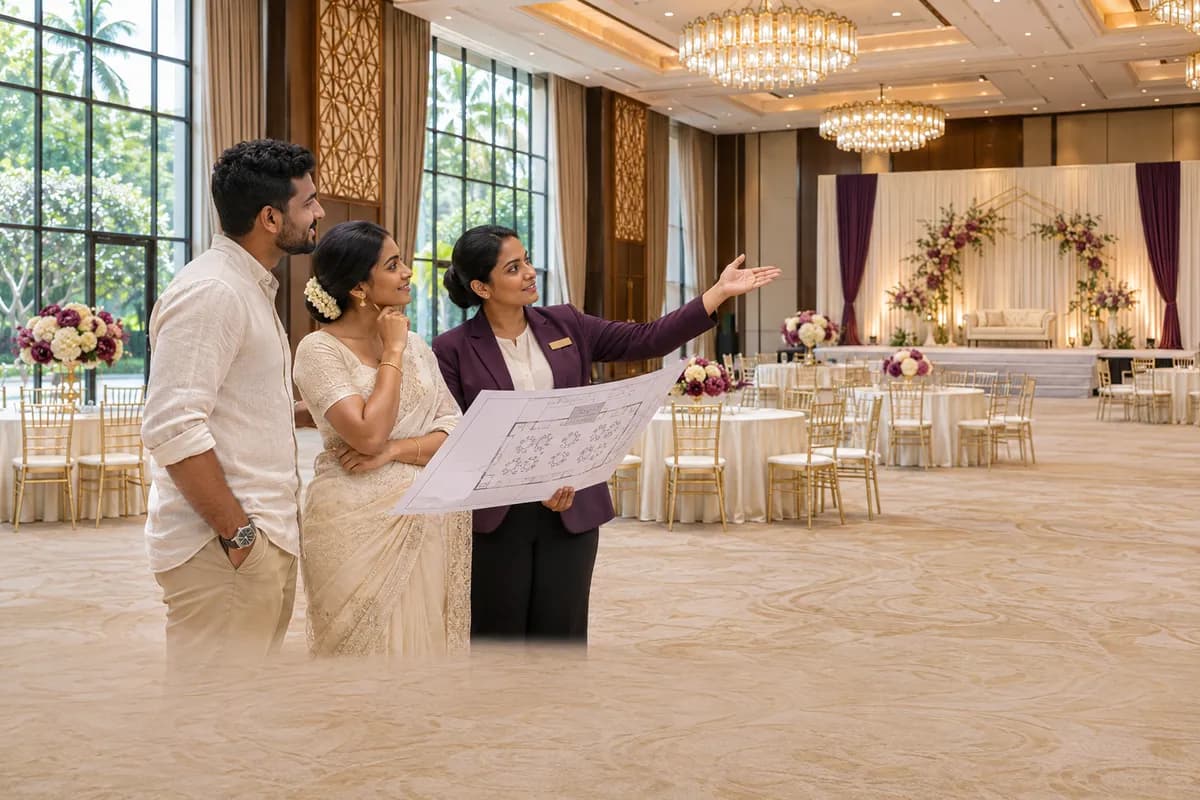
Take the same questions to each venue and ask to see the spaces the package includes. Give the venue your expected guest count, ceremony type and the hours you need. Capture the answers in one place so you can compare layouts and actual costs later.
Check capacity in your preferred setup
Ask to see a floor plan with tables, the ceremony structure, dance floor, speakers and buffet in place. Walk the route from drop-off to a seat and to the toilets. Check the lighting and access on the route guests will use after dark.
If the venue runs more than one event, ask which entrances, parking spaces and facilities you would share. Check how signs and staff will guide guests to the right room.
Get a written total at your likely guest count
Ask for the cost of the room, meals, mandatory charges, setup, overtime and any required equipment. Check any minimum spend and the price per extra guest. Clarify when final numbers are due and how late additions or absences affect billing.
Walk through the handover and backup
Check when vendors can unload and when they must collect equipment. Ask who handles coordination after the booking office closes. If an event depends on outdoor space, view the indoor option with the same floor plan and ask who decides when to move.
Before confirming, request the date-change, payment and cancellation terms in writing. Follow up on any differences between the quoted package and what you were shown.
Compare a room’s package with the way you will use it
Have the venue walk through both a reception for 140 and a fallback layout for 120 if you are unsure of numbers. Ask for the positions of the ceremony, buffet, chairs and reception signs. Some constraints may come from setup or shared access instead of the room itself. Ask the coordinator to price the proposed layout, including equipment, staffing and the wet-weather room you plan to rely on. Identify each operational cost that someone will otherwise need to negotiate on the day.
After the visit, send the same set of questions to your second venue. Keep a record of whom you spoke to and which facts are in writing. Compare agreed access hours and the person who leads setup in addition to the look of the room. Once a layout is chosen, ask the venue for its count and payment deadlines. Move those dates into your task list so a missed approval cannot silently change the plan.
Ask to walk the spaces you are actually booking
Confirm the venue understands your booking date, event type, expected headcount and setup. Ask to see the guest entrance, the service entrance, the ceremony space and the reception room in the same visit. Follow the route between them. Pay attention to doorways, sound limits, shared lifts and areas where guests may need somewhere to wait. Find out which parts are yours at the hours you need and which are shared with other events or hotel visitors.
Ask for a floor plan at the capacity you expect. Include tables, buffet or service stations, any ceremony structure and space for entertainment. Look at where someone will place signs and direct guests so the main entry remains usable. Ask what changes if the headcount increases or you add a service desk. Confirm where suppliers can unload and how they handle waste and collection. Photograph or sketch the version discussed if the venue allows it and attach those notes to the quote.
End the visit by exchanging a short written list of answers and unresolved points. Include the latest time for final numbers, who approves changes and the name of the person who will be on duty during setup. Send the most important facts to the other person who will take the decision. A second venue can then answer the same questions. This is more useful than comparing room photos or the maximum capacity shown on a package without checking the layout behind it.
Agree the room setup and supplier access schedule
Name the room, date and earliest time each vendor can begin using the property. Confirm what the venue will place before suppliers arrive and which items will be collected after the event. Ask whether the loading entrance is shared with the kitchen or an earlier booking. Check access dimensions, parking restrictions and the route from vehicle to room. If equipment is carried upstairs or through a service lift, ask the supplier to plan for that in its crew and arrival time.
Set out the order in a short timetable. For a ballroom setup, staging and electrical runs may need to happen before chairs are placed. Florals or signs may need to wait until heavy equipment is out of the guest route. Ask the venue how long a final inspection takes and who will give clearance. Point out time windows when guest arrivals should have priority over supplier movement. Put restrictions in the reminders sent to each vendor rather than relying on staff to repeat them at the door.
Before final approval, send the layout and timed plan to the venue floor contact, the setup lead and any vendors sharing space. Have one person resolve conflicts and record changes. On the day, place a contact at the appropriate entrance so drivers can find the right room. If load-in slips, that person can tell the next team to delay or take a different route. Make sure the teardown list covers who takes each item, the final exit time and where any belongings are held for collection.
Check guest access between the vehicle, room and facilities
Ask guests privately what would make the event easier to attend. A person may need a closer drop-off, a seat while waiting, step-free access, a companion or a quieter place during long pauses. Write down the action needed and who will help. Share requests only with people arranging the support. A driver usually needs the pickup instructions and capacity, while a venue contact needs the physical access or seating requirement.
Walk the full route with venue staff, preferably with the same doors and lifts that will be available on the day. Check the surface after rain if it was wet on your visit, the height of steps, evening lighting and where guests can reach toilets. Ask what happens if a lift is unavailable or a scheduled entrance is shared with another event. Work out an alternative with the venue and tell the person receiving guests where it begins. Confirm where anyone needing help can wait under cover while a vehicle is being moved.
Test the directions with a trusted person who has not visited. Send the map pin, entrance description and phone contact and ask them to say where they would get out. Prepare a shorter version for someone who prefers a phone call. Tell the welcome team how to greet guests discreetly and which lead can change a seat or route. At the end of the event, check the pickup position again because lighting, parking and traffic may differ from arrival.
Ask for a written comparison of the same service
Give the suppliers the same event schedule, venues, rough guest count and access restrictions. Describe what must be ready at the start time and when equipment can be collected. For services that depend on coverage or unit counts, request those numbers in the quotation itself. A photobooks package can have the same name with different sizes and image counts. A decor hire price can include or exclude the team required to carry items upstairs. Ask the vendor to identify assumptions in its own words.
List the details you care about in rows and each proposal in a column. Compare crew size, duration, delivery, transport, teardown, overtime rates, extra equipment and the person responsible for coordination. Next to any item that is described vaguely, enter a question and date the supplier's reply. If you expect to use an add-on, include it in the working total. Also confirm which items have limits. Extra portraits, a meal tasting or an additional pickup might be possible within a defined time, with a price change after that.
Before confirming the booking, send a summary of the option you are accepting and ask for a written agreement reflecting the same scope and dates. Keep the earlier quote so a later change can be traced. Let the venue know about the agreed arrival, capacity or access conditions that involve its staff. When the people providing adjacent services understand the same plan, they are less likely to duplicate equipment or leave an unassigned task for the family to solve on the day.