Planning and budgets
Planning a Sri Lankan Wedding From Abroad
By MyWeddingDayUpdated
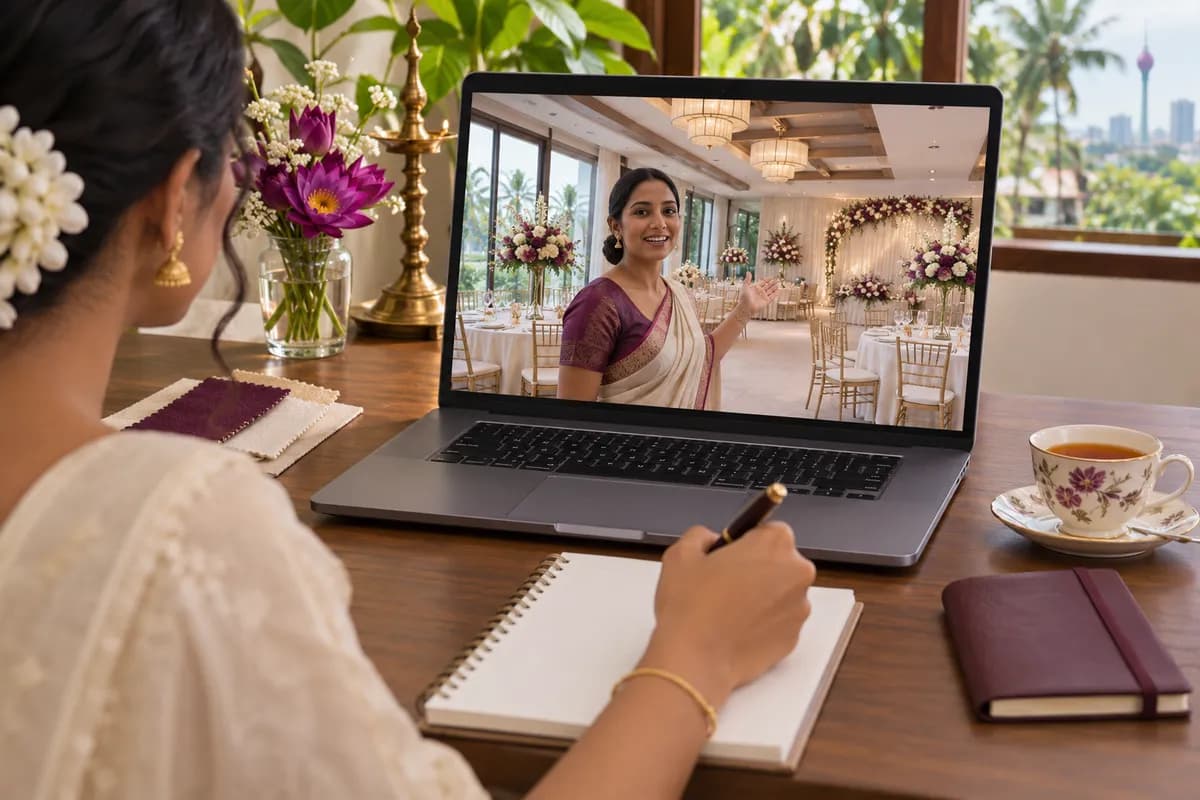
When you are booking from overseas, the biggest gap is often the information someone could gather on a quick site visit. Give local helpers clear tasks, make written records of decisions and keep your first days in Sri Lanka available for checks that genuinely need you there.
Ask for an ordinary video walkthrough
Have a venue contact start the call at the road or car park, then show the entrance, toilets, ceremony area, indoor backup and supplier access. Ask them to walk you through the room with your expected table layout. Request photos of any steps or steep sections that a guest might struggle with.
Appoint one local person who can check details with vendors. Agree what they can decide independently, which costs they can approve and how they should document a change. A weekly written summary helps everyone act across time zones.
Make bookings and transfers traceable
Request a written itemised quote, the payment schedule and the name or business receiving the payment. Confirm payment instructions through an established contact before transferring funds. Store receipts and invoice references with the agreement, recording the currency and the amount received.
Have printers email a digital proof and request a sample if colour or paper matters. Agree who will sign off on family names, translations and the acceptable delivery date while you are abroad.
Use your time on the ground carefully
Book fittings, tastings and ceremony run-throughs in advance. Keep a free block for a correction. Send overseas guests accommodation and transfer information early, and provide one wedding contact who can answer local questions after they land.
Set a decision window across time zones
An example team has one organiser in Australia, one in Sri Lanka and relatives spread across several cities. They agree that written offers will go into a shared record with a response date in Sri Lanka local time. Their local helper can book video tours and ask suppliers for corrections, while only the couple accepts changed prices. Before a payment day, they schedule a short call during hours when both the supplier and a member of the couple are available. Nobody needs to infer acceptance from silence overnight.
They give each relative the instructions they actually need. The airport driver receives a pickup manifest, the stationer receives confirmed name spellings, and the venue receives the room plan and guest count. After landing, the couple spends its first site visit verifying the loading route, lighting and covered plan that were hard to see on video. They reserve a separate slot for a fitting instead of putting both items on the day immediately before the wedding.
Run a remote venue walkthrough that answers practical questions
Ask a local helper or the venue contact to join a video call at the entrance. Start where a guest would be dropped off and follow the route to the room, ceremony area and toilets. Have them pause near steps, steep paths, changes in lighting and points where guests would need help. Ask to see the actual room that would be used when it rains. If a walk is unavailable during another event, request a follow-up slot or an annotated floor plan with current photos rather than relying on an opening image of the property.
Send the person on site a short set of questions ahead of time. Include room capacity in your preferred layout, setup access, what is shared and how staff can be reached after the booking office closes. Give them enough authority to ask for clarification, but make clear who signs off on a price or a layout change. Ask for a written summary afterward. A photo of the separate service entrance or a screen recording of the route can answer future questions when you brief drivers and suppliers.
Schedule a short validation after travelling, if you can. Use it to confirm the things that are difficult to assess remotely, such as how the venue handles sound or whether the approach is awkward at the intended hour. Keep a shared list of claims still to verify. Where an open question could affect capacity, price or access, ask for the answer before relying on the booking. Save the written decision and due date with the rest of the plan.
Put every supplier payment on one ledger
Create a row for each signed booking and list the supplier's trading name, package, agreed total, deposit received, remaining balance and next due date. Keep the actual agreement and receipt with that row. If instalments are scheduled, record each in its own dated entry. Include the named person who approves spending and the person who makes the transfer. The organiser can then tell whether a bill is outstanding, promised by a family member or already paid without reopening multiple chat threads.
For example, a made-up caterer quote of LKR 360,000 with LKR 90,000 paid leaves LKR 270,000. If a confirmed layout change adds LKR 18,000, write the approved new total as LKR 378,000 and keep a reference to the earlier version. The outstanding balance becomes LKR 288,000. Ask the supplier to confirm the change and what payment milestone it affects. Save acknowledgements and receipts using the same supplier and event names so an on-day coordinator can find them quickly.
Agree how the team will confirm payment details. Use a known supplier contact to verify any new account details or a change of payment recipient, and store only the reference and receipt where other planners need access. At the final handover, give the payer a short list of expected balances, accepted payment methods and who signs the receipt. A substitute organiser should be able to match a claimed payment to its invoice without needing to see a private bank message.
Build a transport manifest households can use
List each departure and return by hotel or meeting point. Record the time people should arrive, the time the driver leaves, the expected seat count and the person confirming it. Ask the transport provider about luggage, child seats and the type of vehicle that fits each approach. Walk or test the pickup at the relevant hour if possible. A turning place workable for a car can be hard for a larger vehicle when other guests are arriving.
Use one message per pickup group. Include the local date and meeting time, the correct map pin or door name, the host contact and the return arrangements. Tell people what to do if they arrive after departure and where they can wait for help. Give each driver the list they need for their own group and keep travel details private. When booking from overseas, confirm dates across time zones and ask the provider to repeat the local time. Agree who calls out a change when a flight is delayed or a driver switches vehicles.
On the wedding day, ask each pickup contact to confirm when their group has departed. Tell the venue if the delay affects a ceremony or fixed meal service. After the event, check that the pickup area is lit and arrivals with different departure times have a waiting position. Use a list that can be checked on a phone or printed, with a named backup if the primary contact is at another venue.
Keep one master copy for digital and printed details
Place the event name, room, date, arrival time, map pin and RSVP method in one reference that both the stationery and digital teams use. Add separate rows for each event, including the homecoming if it has its own location and headcount. Agree who can approve a change. A designer should know which details are confirmed and which ones can remain as placeholders in a proof. A family volunteer should know which copy to use when answering a guest's question.
When an update is approved, mark the exact old and new details and list which materials already went out. A change to parking instructions may require an updated digital page, an insert and a message to guests catching a shuttle. A date or venue change may require a broader notice. Use language that spells out the new instruction and the event it affects. Send it by the same channel the household used previously if that channel reached them. Make a phone call where the change has a large impact and the usual recipient is hard to reach.
Test the new version like a fresh invitation. Check that the URL opens, the map pin points to the correct approach and the displayed dates still match the event that the household can attend. Date the master and keep one record of whom you contacted. A volunteer who joins near the wedding can then answer from the current information without guessing which card or chat message was the latest.