Guests and ceremonies
What to Do When Your Wedding Guest List Outgrows the Venue
By MyWeddingDayUpdated
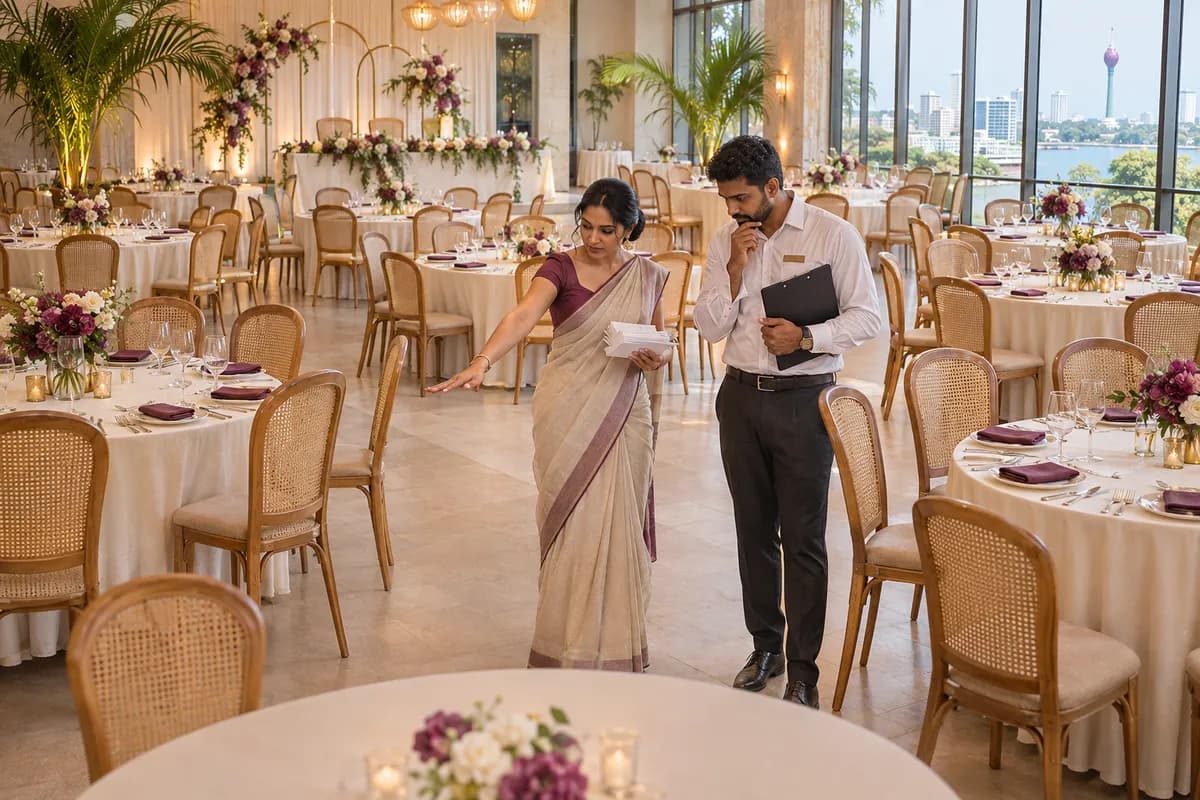
The guest list may outgrow the room after you add colleagues, children or a second family list. Find the number of people genuinely invited and the usable capacity of the layout before promising new seats.
Confirm the actual gap at the current layout
Ask the venue to check seats with the tables, stage and meal service you agreed. A published capacity of 200 may refer to a different arrangement from the one needed for your entrance or buffet. Count confirmed and pending invitees separately and flag companions or children who need seats. Remove duplicate entries only after the families confirm they are the same person. If the list appears 15 above your approved layout, note how many were promised invitations and how many are names proposed for a later discussion.
Check whether additional tables make the route harder for guests or staff. Ask the venue for a sketch of a second layout and confirm its real price and corresponding payment deadline. An adjacent room may help only if people can still take part in the ceremony or reception and understand where to go. Agree with the families how to handle a request for more places after the decision.
Speak privately to households when an invitation needs clarifying
If someone believes they have been promised a place, ask the relative who invited them to clarify the situation. Give an accurate answer and a date if you are waiting on the venue. Avoid publicly keeping people on a standby list. If you choose a separate family gathering for some guests, discuss it as its own event with a clear invitation. Save the approved lists and layout by event so new requests can be checked against the same numbers.
Compare the household record with the actual attendance
Group names the way invitations will be delivered. Give each household one contact and one invitation owner. Then record the people inside the group and which events each person can attend. The same guest might join the ceremony and reception while another member of the household attends only the reception. Recording the assignment at person level lets you prepare seat and meal numbers without requiring the family to deal with several separate contacts.
A test record could be the Perera household with four invited people. Two are expected at the ceremony and three at the reception. One of the three needs a high chair. When the reply comes in saying that only the parents will attend, clarify which event the answer refers to before editing the other count. Record the channel and date of the final confirmation. Keep pending attendance visible until the follow-up owner has checked it. Where people appear under two family lists, decide who sends the invitation and preserve a note so both helpers know it has been handled.
Before sending the count to a venue, inspect a sample of households that contain several guests and attend different events. Check that each person is counted once in each relevant event. Send the caterer the count and the meal categories you agreed to share. Give the welcome team the limited information it needs to seat people. Keep contact details and private notes with the organiser responsible for following up.
Run a decision meeting with both families
Ask each household to send the decisions that affect its guests or traditions before the meeting. Keep the invitation list, seating, spending commitments and ceremony order in separate rows so people can discuss one effect at a time. For a decision that needs both families, arrange for someone from each to confirm it. Name a coordinator to record the agreed choice and the next person who needs to hear it. That might be the venue, the stationer or a parent who is handling invitation delivery.
Try opening with an agreed constraint that can be verified. The venue has accepted a layout with twelve tables. The caterer needs an updated number two days before your next family call. The supplier's deposit holds the room only after it is received. Once everyone hears the same condition, ask for two workable choices and write down what changes under each one. If someone wants twenty extra names, show how that affects tables and transport. If another person wants the traditional entrance at a different hour, ask the coordinator which part of the schedule has to move.
Finish by reading back the choice, the person who will act and the date by which it needs to be done. Save the notes in the planning workspace. Send the people affected a short excerpt in the language they prefer. An unresolved item stays open with a deadline and an explicit default. This avoids having a polite pause in one conversation turn into conflicting instructions in two separate family chats.
Test the floor plan as a guest would use it
Ask the venue for the actual tables, chair sizes and service positions included in your booking. Take an entrance-to-seat route and then a seat-to-toilet route. Check what happens when the buffet, emergency exits and photography positions are in use. A floor plan can show a clear line while real chairs or a decoration stand reduces that space. Agree with the venue how to place high chairs and how to seat guests who ask for easier access. Record the accepted capacity of each table before moving people between groups.
Start placing households with the least flexibility. A person who needs a companion should have space for both. A parent with a child may need an easy route out. Think through conversations and sight lines for family tables, and check where music is loud. Move a whole group or ask the person who knows it to help when splitting is necessary. Record a small number of seats you can use for late changes if the venue agrees and there is room to serve them.
Walk the final layout with the person who will direct guests. Check table numbers as they will be visible from the entrance, including where an easel or sign could slow arrivals. Create a plain name-sorted lookup for the welcome desk and a table-numbered plan for room setup. Include the seat counts and any discrete service instructions in the staff copy. Recheck the route after setup so a late change to equipment does not undo the work.
Price two scenarios before approving a spend
Use the same guest and service assumptions in both columns. Start with the accepted venue layout and the number of places it actually holds. Put room hire, staffing and contracted minimums in fixed rows. Put meals, vehicle seats, favours and invitation quantities in rows that can change. Mark each figure as confirmed, estimated or awaiting a written quote. If a relative is paying for one item, record which invoice it applies to and when their contribution is expected.
Suppose a venue can seat 140 people in the first layout and 156 in another, and the second layout requires another service station. Ask the venue to work up the total for each layout, including mandatory charges. Add the incremental cost of fifteen meals, a different shuttle size and the extra equipment that each supplier confirms. The example numbers describe a method. Your real budget should come from your own package and guest list. If the two layouts differ in accessibility or cover from rain, write the trade-off beside the price.
Before deciding, calculate what cash is needed by each payment deadline. The option with the lower overall cost can still put pressure on next month's funds if its deposit is due immediately. Record the cost impact of a change on the existing budget and retain a separate reserve line for known uncertainties. Have the person who confirms spending read back the accepted amount and give the family or supplier a short written update.