Guests and ceremonies
How to Seat Wedding Guests When Family Relationships Are Tense
By MyWeddingDayUpdated
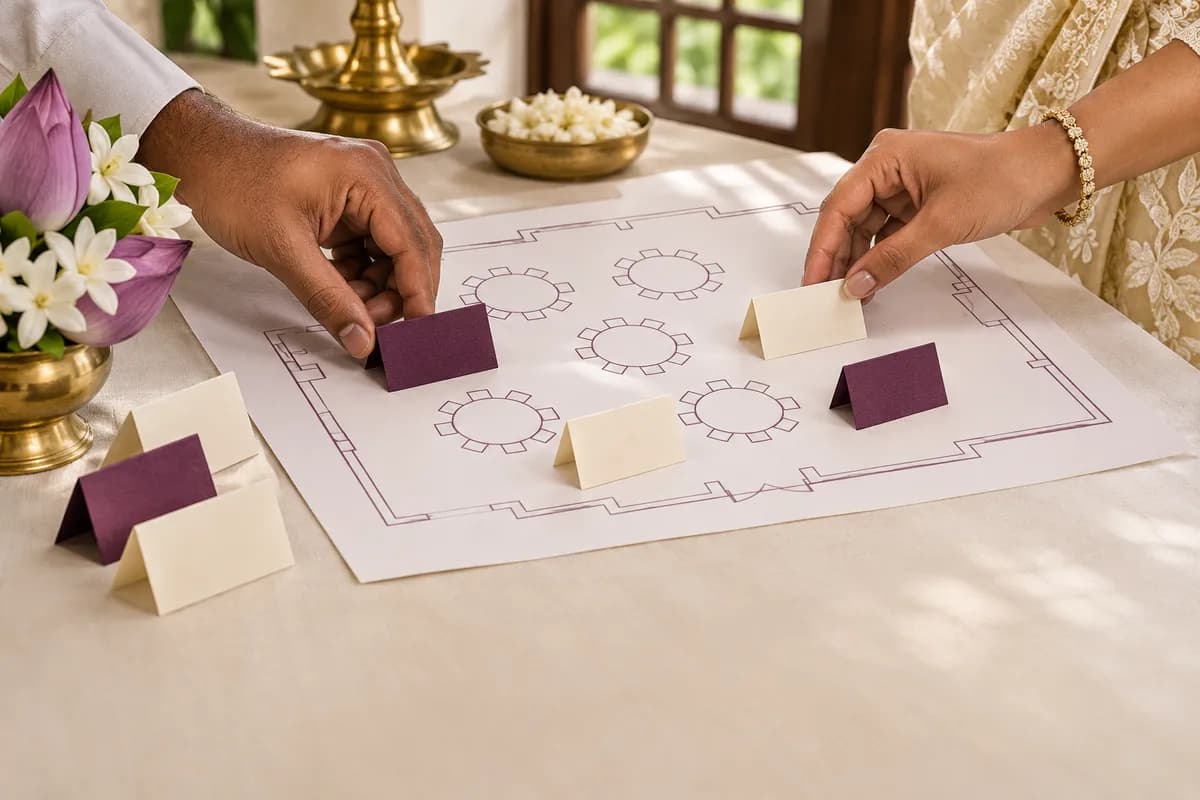
A seating plan can support comfort without making private family relationships public. Start with the physical room, then ask for the minimum information needed to place people tactfully.
Translate sensitive requests into practical placement needs
Ask each family contact who should be seated together, who needs an exit route and which combinations they would prefer to avoid. Record only the placement requirement, such as separate tables or a companion seat, without copying private stories into the venue plan. If someone wants a specific table near the couple, discuss why that position matters and whether access or a role in the ceremony affects it. Put the venue's capacity and paths on the plan before assigning disputes to a particular table.
For example, two members of the same family prefer to sit separately but each usually helps an older relative. Ask which relative will accompany the guest and where arrival staff can direct them if they enter together. Give both groups a table with familiar people and a clear way to find it. If a third relative objects to a placement, ask the relevant family helper to resolve it quietly and check the approved reasons before moving anyone.
Prepare the welcome team for changes without sharing the backstory
Give helpers a name lookup and the floor lead a few spare seats where the venue agrees they can be used. Tell the team who can confirm a move. If someone asks at the door to change tables, have that person check the seat and meal first. Update catering and the table plan as needed. A guest-facing answer can be as simple as the new table number and a guide to reach it.
Test the floor plan as a guest would use it
Ask the venue for the actual tables, chair sizes and service positions included in your booking. Take an entrance-to-seat route and then a seat-to-toilet route. Check what happens when the buffet, emergency exits and photography positions are in use. A floor plan can show a clear line while real chairs or a decoration stand reduces that space. Agree with the venue how to place high chairs and how to seat guests who ask for easier access. Record the accepted capacity of each table before moving people between groups.
Start placing households with the least flexibility. A person who needs a companion should have space for both. A parent with a child may need an easy route out. Think through conversations and sight lines for family tables, and check where music is loud. Move a whole group or ask the person who knows it to help when splitting is necessary. Record a small number of seats you can use for late changes if the venue agrees and there is room to serve them.
Walk the final layout with the person who will direct guests. Check table numbers as they will be visible from the entrance, including where an easel or sign could slow arrivals. Create a plain name-sorted lookup for the welcome desk and a table-numbered plan for room setup. Include the seat counts and any discrete service instructions in the staff copy. Recheck the route after setup so a late change to equipment does not undo the work.
Check guest access between the vehicle, room and facilities
Ask guests privately what would make the event easier to attend. A person may need a closer drop-off, a seat while waiting, step-free access, a companion or a quieter place during long pauses. Write down the action needed and who will help. Share requests only with people arranging the support. A driver usually needs the pickup instructions and capacity, while a venue contact needs the physical access or seating requirement.
Walk the full route with venue staff, preferably with the same doors and lifts that will be available on the day. Check the surface after rain if it was wet on your visit, the height of steps, evening lighting and where guests can reach toilets. Ask what happens if a lift is unavailable or a scheduled entrance is shared with another event. Work out an alternative with the venue and tell the person receiving guests where it begins. Confirm where anyone needing help can wait under cover while a vehicle is being moved.
Test the directions with a trusted person who has not visited. Send the map pin, entrance description and phone contact and ask them to say where they would get out. Prepare a shorter version for someone who prefers a phone call. Tell the welcome team how to greet guests discreetly and which lead can change a seat or route. At the end of the event, check the pickup position again because lighting, parking and traffic may differ from arrival.
Run a decision meeting with both families
Ask each household to send the decisions that affect its guests or traditions before the meeting. Keep the invitation list, seating, spending commitments and ceremony order in separate rows so people can discuss one effect at a time. For a decision that needs both families, arrange for someone from each to confirm it. Name a coordinator to record the agreed choice and the next person who needs to hear it. That might be the venue, the stationer or a parent who is handling invitation delivery.
Try opening with an agreed constraint that can be verified. The venue has accepted a layout with twelve tables. The caterer needs an updated number two days before your next family call. The supplier's deposit holds the room only after it is received. Once everyone hears the same condition, ask for two workable choices and write down what changes under each one. If someone wants twenty extra names, show how that affects tables and transport. If another person wants the traditional entrance at a different hour, ask the coordinator which part of the schedule has to move.
Finish by reading back the choice, the person who will act and the date by which it needs to be done. Save the notes in the planning workspace. Send the people affected a short excerpt in the language they prefer. An unresolved item stays open with a deadline and an explicit default. This avoids having a polite pause in one conversation turn into conflicting instructions in two separate family chats.
Prepare a one-page brief for the people doing the work
Put the event date, guest entrance, supplier entrance and room names at the top. List the person responsible for the schedule, the venue floor lead and the person authorised to approve costs. Add a number they will answer on the day and one backup contact for each team. Where the wedding has several events, prepare a short copy for each venue. Use the same naming as the invitation and vendor agreement so a driver can find the event quickly at a hotel or hall serving several groups.
For every task you pass on, write what complete looks like. The person meeting the stationer should check the boxes by table number and hand off the spare cards to the seating lead. The hall contact needs to know which doors open for guests and which stay available for the catering team. A relative bringing ceremony items needs an arrival time and the name of the person who receives them. If a supplier is late, name the team member who calls them and the next person who needs to know.
Run through the brief with one person who has never seen the full plan. Ask them to locate the correct entrance and find the backup contact. Find a mistake to simulate, such as a driver taking guests to the loading area. Ask the reader to explain what they would do without consulting the couple. Fix the brief where they have to guess. Share the final revision electronically and leave a printed copy at the venue if several helpers will rely on it.