Venues and destinations
How to Catch Hidden Wedding Venue Charges Before Booking
By MyWeddingDayUpdated
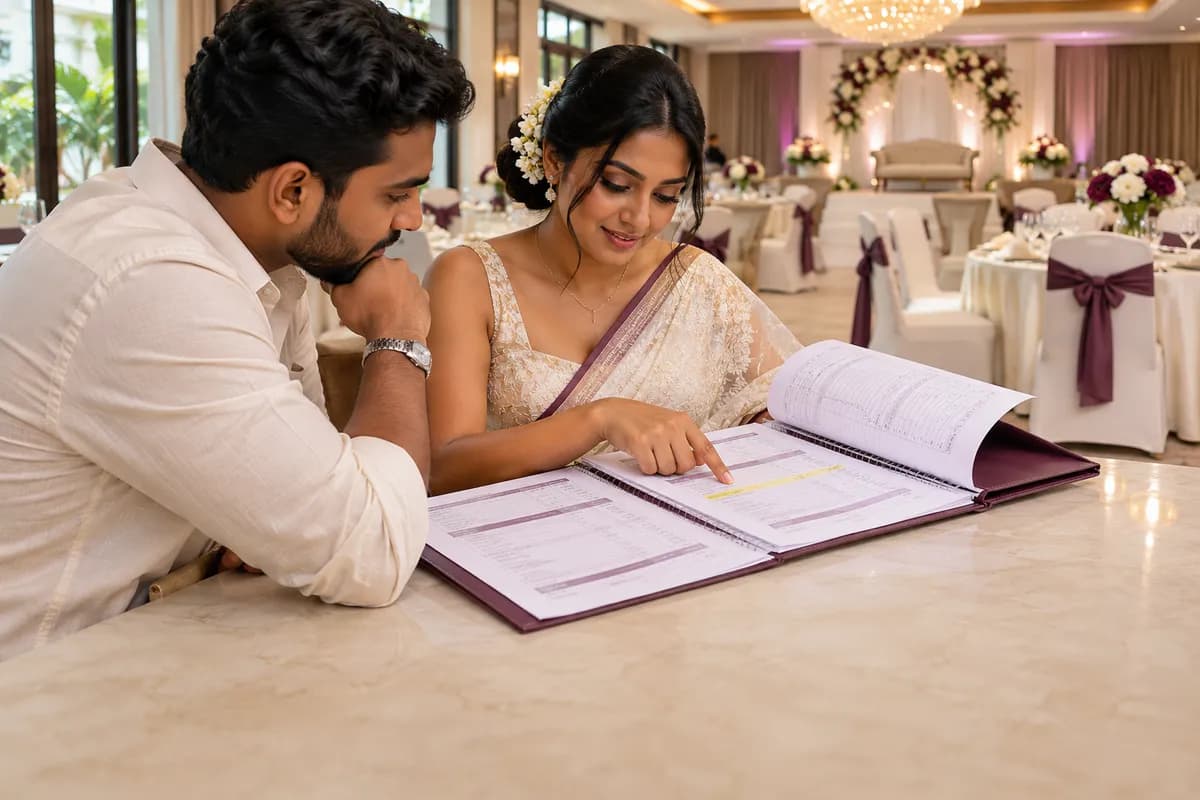
A package price is useful once it describes the room, time and guest count you actually want. Ask for written totals for your layout and likely service needs before comparing venues or paying a deposit.
Ask for an all-in venue total under two guest counts
Request a bill for your likely count and a practical higher count, including the exact meal service, room hours and setup. Confirm whether there are mandatory charges, a minimum spend, outside vendor fees, paid equipment or a charge for late collection. Ask which parts are conditional. A photography crew needing access earlier than normal is a good example. If you want a covered alternate room, ask when it is reserved and what you would pay to use it.
Review any item's unit and timing. A charge per table behaves differently from a charge per guest when adding five people exceeds the approved layout. Walk the room with the scope list and ask staff what is already provided. Check whether a smaller event in the same space pays the same room or staff amount and when the venue expects the final headcount. Include the printed menu or invitation expenses only in the total where your own plan needs them.
Confirm the accepted package with a short written summary
Repeat the chosen room, hours, expected capacity, confirmed items and total in writing. Ask the venue who can authorise overtime and by how much. Save prior quotes and the latest signed booking with the payment schedule. If a supplier or family member changes the plan, check the relevant conditional line before promising anything. This makes both cancellations and legitimate added costs easier for the payer to reconcile.
Ask for a written comparison of the same service
Give the suppliers the same event schedule, venues, rough guest count and access restrictions. Describe what must be ready at the start time and when equipment can be collected. For services that depend on coverage or unit counts, request those numbers in the quotation itself. A photobooks package can have the same name with different sizes and image counts. A decor hire price can include or exclude the team required to carry items upstairs. Ask the vendor to identify assumptions in its own words.
List the details you care about in rows and each proposal in a column. Compare crew size, duration, delivery, transport, teardown, overtime rates, extra equipment and the person responsible for coordination. Next to any item that is described vaguely, enter a question and date the supplier's reply. If you expect to use an add-on, include it in the working total. Also confirm which items have limits. Extra portraits, a meal tasting or an additional pickup might be possible within a defined time, with a price change after that.
Before confirming the booking, send a summary of the option you are accepting and ask for a written agreement reflecting the same scope and dates. Keep the earlier quote so a later change can be traced. Let the venue know about the agreed arrival, capacity or access conditions that involve its staff. When the people providing adjacent services understand the same plan, they are less likely to duplicate equipment or leave an unassigned task for the family to solve on the day.
Price two scenarios before approving a spend
Use the same guest and service assumptions in both columns. Start with the accepted venue layout and the number of places it actually holds. Put room hire, staffing and contracted minimums in fixed rows. Put meals, vehicle seats, favours and invitation quantities in rows that can change. Mark each figure as confirmed, estimated or awaiting a written quote. If a relative is paying for one item, record which invoice it applies to and when their contribution is expected.
Suppose a venue can seat 140 people in the first layout and 156 in another, and the second layout requires another service station. Ask the venue to work up the total for each layout, including mandatory charges. Add the incremental cost of fifteen meals, a different shuttle size and the extra equipment that each supplier confirms. The example numbers describe a method. Your real budget should come from your own package and guest list. If the two layouts differ in accessibility or cover from rain, write the trade-off beside the price.
Before deciding, calculate what cash is needed by each payment deadline. The option with the lower overall cost can still put pressure on next month's funds if its deposit is due immediately. Record the cost impact of a change on the existing budget and retain a separate reserve line for known uncertainties. Have the person who confirms spending read back the accepted amount and give the family or supplier a short written update.
Ask to walk the spaces you are actually booking
Confirm the venue understands your booking date, event type, expected headcount and setup. Ask to see the guest entrance, the service entrance, the ceremony space and the reception room in the same visit. Follow the route between them. Pay attention to doorways, sound limits, shared lifts and areas where guests may need somewhere to wait. Find out which parts are yours at the hours you need and which are shared with other events or hotel visitors.
Ask for a floor plan at the capacity you expect. Include tables, buffet or service stations, any ceremony structure and space for entertainment. Look at where someone will place signs and direct guests so the main entry remains usable. Ask what changes if the headcount increases or you add a service desk. Confirm where suppliers can unload and how they handle waste and collection. Photograph or sketch the version discussed if the venue allows it and attach those notes to the quote.
End the visit by exchanging a short written list of answers and unresolved points. Include the latest time for final numbers, who approves changes and the name of the person who will be on duty during setup. Send the most important facts to the other person who will take the decision. A second venue can then answer the same questions. This is more useful than comparing room photos or the maximum capacity shown on a package without checking the layout behind it.
Put every supplier payment on one ledger
Create a row for each signed booking and list the supplier's trading name, package, agreed total, deposit received, remaining balance and next due date. Keep the actual agreement and receipt with that row. If instalments are scheduled, record each in its own dated entry. Include the named person who approves spending and the person who makes the transfer. The organiser can then tell whether a bill is outstanding, promised by a family member or already paid without reopening multiple chat threads.
For example, a made-up caterer quote of LKR 360,000 with LKR 90,000 paid leaves LKR 270,000. If a confirmed layout change adds LKR 18,000, write the approved new total as LKR 378,000 and keep a reference to the earlier version. The outstanding balance becomes LKR 288,000. Ask the supplier to confirm the change and what payment milestone it affects. Save acknowledgements and receipts using the same supplier and event names so an on-day coordinator can find them quickly.
Agree how the team will confirm payment details. Use a known supplier contact to verify any new account details or a change of payment recipient, and store only the reference and receipt where other planners need access. At the final handover, give the payer a short list of expected balances, accepted payment methods and who signs the receipt. A substitute organiser should be able to match a claimed payment to its invoice without needing to see a private bank message.