Invitations and RSVPs
The Wedding Invitation Has the Wrong Date. How Do You Fix It?
By MyWeddingDayUpdated
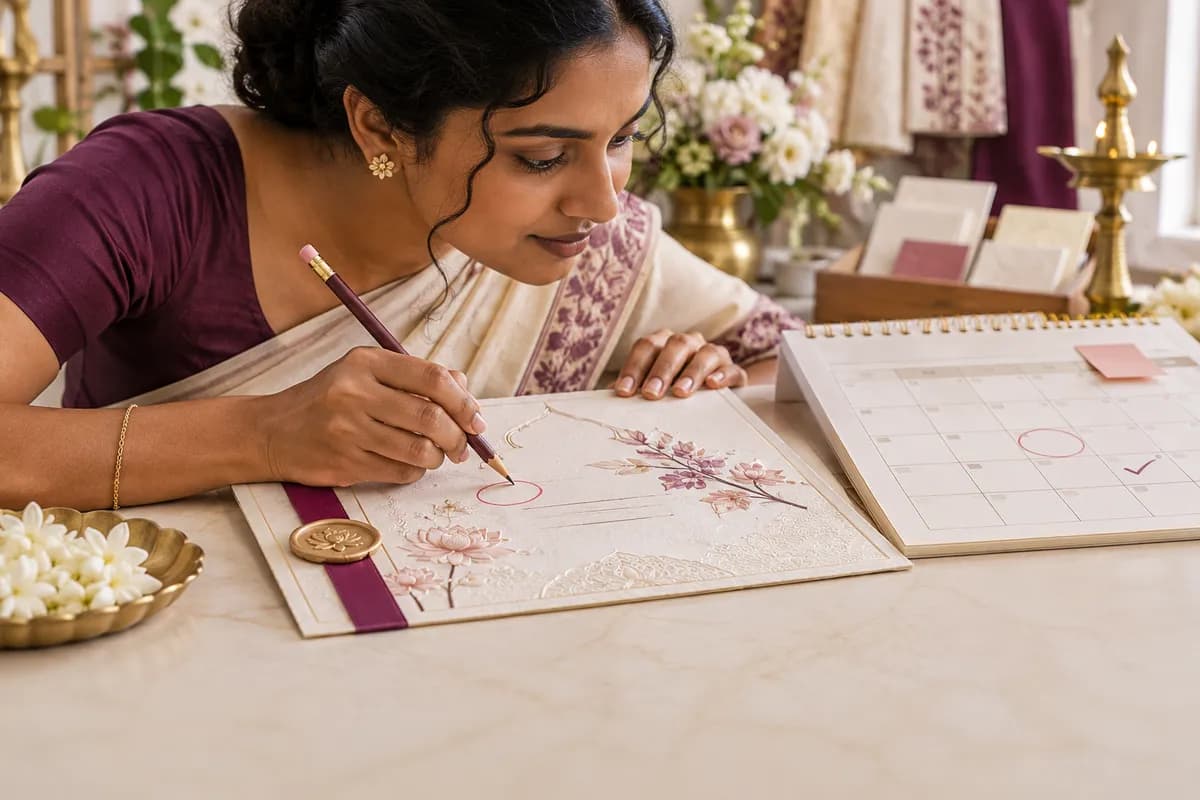
A wrong date can spread quickly if several people have the old invitation. First confirm the correct date with the venue, the couple and the person handling the schedule. Then stop further delivery while you identify who already saw the mistake.
Mark who actually received the wrong version
List the affected event, the incorrect value and the verified replacement. Ask each delivery helper which households got the old card, a photo of the card or a personalised link. Set aside printed stock that has not been handed out. Update the digital master and confirm whether personalised invitations reflect the corrected version. Check the date and day of the week together alongside the arrival time and reply deadline. If there was more than one event on the old card, make clear which event has changed.
For the correction, try “Please use Saturday, 12 December, for our wedding reception at [venue]. An earlier invitation showed the wrong date. We would be grateful if you could confirm Saturday with [contact].” Use both scripts if the original went out in both. Call households that may have booked transport, taken leave or already replied. Give helpers a way to mark who acknowledged the correction so the team can follow up only where needed.
Decide whether the printed piece needs reprinting
Check whether a separate correction slip or a reprint gives the guest the clearest instructions. If the error sits prominently on the front or already confused several households, an insert may be easy to miss. Have the stationer quote the fastest clear option and proof the sample before production. Keep old and corrected bundles apart. Confirm the final version with the ceremony or venue lead and give the correct information to any supplier who received a guest copy.
Keep one master copy for digital and printed details
Place the event name, room, date, arrival time, map pin and RSVP method in one reference that both the stationery and digital teams use. Add separate rows for each event, including the homecoming if it has its own location and headcount. Agree who can approve a change. A designer should know which details are confirmed and which ones can remain as placeholders in a proof. A family volunteer should know which copy to use when answering a guest's question.
When an update is approved, mark the exact old and new details and list which materials already went out. A change to parking instructions may require an updated digital page, an insert and a message to guests catching a shuttle. A date or venue change may require a broader notice. Use language that spells out the new instruction and the event it affects. Send it by the same channel the household used previously if that channel reached them. Make a phone call where the change has a large impact and the usual recipient is hard to reach.
Test the new version like a fresh invitation. Check that the URL opens, the map pin points to the correct approach and the displayed dates still match the event that the household can attend. Date the master and keep one record of whom you contacted. A volunteer who joins near the wedding can then answer from the current information without guessing which card or chat message was the latest.
Keep a change record when the plan moves
Start from the last version the venue and suppliers received. Add the date and time of the change, the old instruction, the new instruction and who approved it. Record the impact by event. A different ceremony venue could affect printing, driver pickup, guest access, sound setup and the sequence of family photos. Assign one action owner for each effect and give them a deadline. The person making the decision should know which commitment the change depends on, including any extra cost or time agreed by a supplier.
Use a simple format for outgoing messages. Lead with the affected event and the updated detail. Add who needs to act, what the recipient should confirm and the best number to call if there is a problem. Send only the appropriate information to each audience. The invitation update may carry a new guest entrance and time. The supplier message may need the loading route and sound check slot. Keep vendor pricing and private guest details in the records used by the people who need them.
After sending, ask the person receiving the change to reply with the detail they will use. Confirm the photographer saved the new room, the driver has the new meeting point and the family contact has the current arrival message. Update the guest count or schedule in the planning workspace and archive the old working copy. A small read-back is valuable when reception staff work different shifts or family volunteers step in at short notice. It catches a surprising number of changes before someone arrives at the old location.
Give each household a clear delivery owner
Make a list that groups invitees by the person receiving the invitation. Record the event, the preferred channel, the language, the sender and the date it was sent. A parent delivering print copies may have a different list from a cousin sending WhatsApp messages. Both should work from the same household record. Where more than one person helps, agree which person has the latest contact details and handles follow-up. Record a call or personal visit alongside a digital send so a household does not get several unexplained reminders.
Before sending a batch, check names and event against the message or envelope. Put time aside for calls to guests who use a shared phone, have a new number or need directions explained. Ask the delivery owner to mark returned envelopes, undelivered messages and wrong contacts. An unchanged delivery date is enough for the first send. For a correction, add a new dated entry and mention what changed so a second person can see why the household was contacted again.
Track delivery separately from the reply. A guest can have received the card and still be deciding. Equally, someone can confirm by phone before a paper card arrives. At the next family check-in, review only the households with a delivery problem, pending reply after the cutoff or a change that requires a new message. Keep the contact information with the delivery team. The caterer and venue can usually work with totals and table instructions without receiving everyone's numbers.
Approve a production sample and a receiving plan
Ask the stationer to show the exact dimensions, paper, envelope and finish in the quote. Find out how a sample is made and what it can tell you. A PDF is usually the right place to check spelling and arrangement. A physical sample lets you feel the stock and assess contrast, folds and the space left for handwriting. Ask whether colours and finishes will match the final run closely enough to approve. Check where artwork is trimmed and whether important lines sit safely inside that area.
Make an approval checklist for the viewer with the best source of each fact. The ceremony lead confirms the event timing, the families check names and the RSVP owner tests the contact method. Scan any code on a real printed sample and open the link from more than one device. Put all corrections into one list. Ask the stationer to return a version with the corrections applied and save the exact file used to approve printing.
Agree who receives the finished cards and when someone will check the delivery. Open boxes from different parts of the order and check quantity, envelopes and any distinct inserts. Compare the delivered card with the final proof. If part of the order is wrong, photograph the affected batch and give the stationer the order reference and required date for replacements. Keep the correct stacks separated until the discrepancy is resolved. This makes it easier to deliver the ready sets and avoid mixing revised and earlier cards.