Invitations and RSVPs
A Wedding Invitation Print Proof Checklist
By MyWeddingDayUpdated
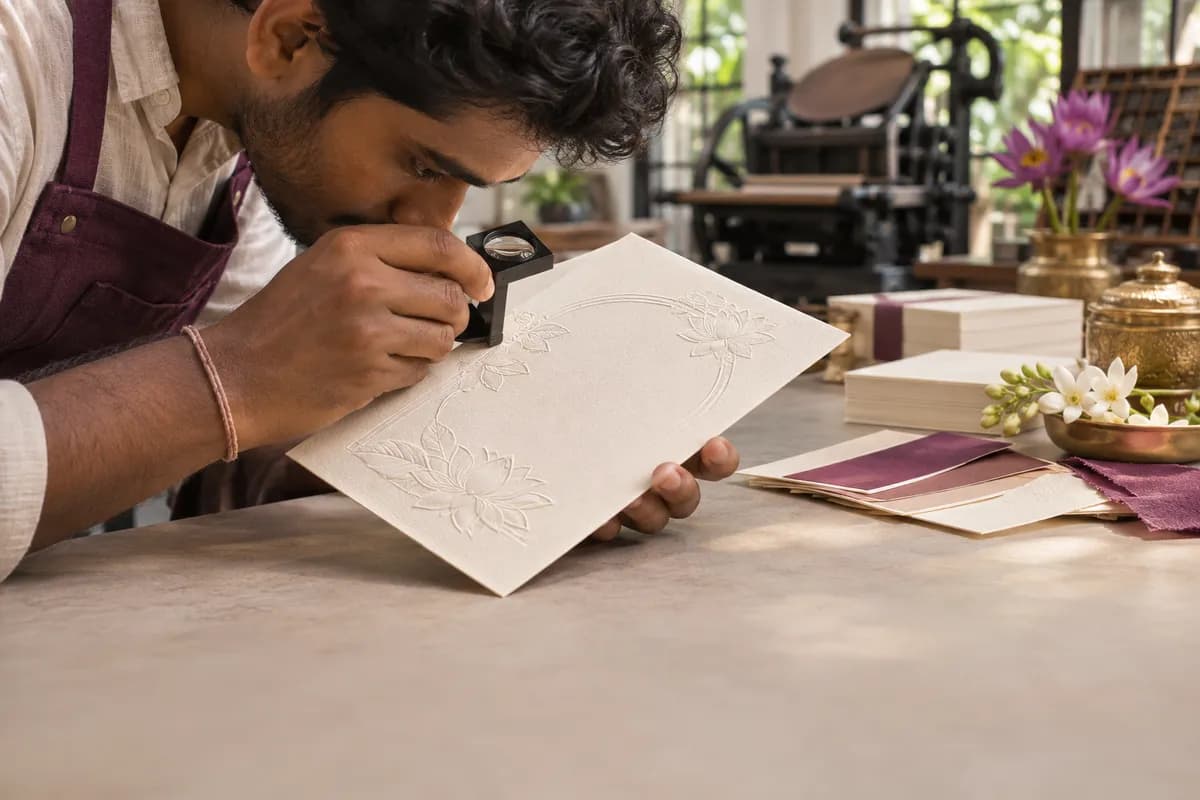
A print proof is the version you approve for production. Ask what kind of proof you will receive and whether a physical sample is available. A digital proof is good for checking details; a sample lets you assess size, contrast and how the printed colours look on the chosen stock.
Proof against the master event details
Check names, dates and times line by line with someone from each family. Read map directions aloud and call the RSVP number. If a code opens a wedding page, scan it from the printed proof with more than one phone and check which page it opens.
Ask a fluent reader to check any Sinhala or Tamil typography in the exported proof. Verify that line breaks have kept titles and names together, and check that no letterforms are clipped or replaced by missing-character boxes.
Inspect the physical card
Ask the printer to show trim and fold positions. Slip the card and any insert into the actual envelope. Check that small text is clear in ordinary indoor light and that any foil, embossing or decorative border leaves enough space around the details.
Keep one approved file and a delivery plan
Record the proof version, paper, quantity, envelope count, delivery date and who signed off. Confirm who will check the first delivery and how any shortage or production error is reported. Keep a copy of the approved proof for comparison.
Check an approval when two inserts go into the same envelope
Lay out a finished example for each invite type. A household coming to the reception only may get the reception card and travel note. One attending both may also need the ceremony time and entrance. Make one clear production label for each stack, even if the cards look similar from the back. Ask the stationer how the bundles will be identified when they arrive. Then ask the delivery owner to assemble and check one complete envelope using the real guest list.
Test scannable codes at the smallest size and on the final paper. Foil or a gloss finish can change contrast. Check the landing page on a normal phone, and read the printed fallback number aloud so someone else can dial it correctly. Save the proof and the instruction about assembly with the signed order. If the venue gives you a new detail afterward, compare the cost and time of reprinting the card with a clear separate correction for households that need it.
Approve a production sample and a receiving plan
Ask the stationer to show the exact dimensions, paper, envelope and finish in the quote. Find out how a sample is made and what it can tell you. A PDF is usually the right place to check spelling and arrangement. A physical sample lets you feel the stock and assess contrast, folds and the space left for handwriting. Ask whether colours and finishes will match the final run closely enough to approve. Check where artwork is trimmed and whether important lines sit safely inside that area.
Make an approval checklist for the viewer with the best source of each fact. The ceremony lead confirms the event timing, the families check names and the RSVP owner tests the contact method. Scan any code on a real printed sample and open the link from more than one device. Put all corrections into one list. Ask the stationer to return a version with the corrections applied and save the exact file used to approve printing.
Agree who receives the finished cards and when someone will check the delivery. Open boxes from different parts of the order and check quantity, envelopes and any distinct inserts. Compare the delivered card with the final proof. If part of the order is wrong, photograph the affected batch and give the stationer the order reference and required date for replacements. Keep the correct stacks separated until the discrepancy is resolved. This makes it easier to deliver the ready sets and avoid mixing revised and earlier cards.
Proof the invitation in every script before releasing it
Agree the facts first. Put the spelling of the couple's and parents' names, the ceremony title, venue name, room, date, time and RSVP instructions in one file. Give each language reviewer the original information and the finished version. Ask someone who reads that script fluently to check forms of address and preferred names with the family. If you get competing spellings, ask the person whose name it is or the relative handling that household to confirm.
Check the design at its final size. Watch for missing glyphs, cramped line breaks and important words wrapping onto a new line without context. Verify that the date and times describe the same event across versions. A numeral that looks similar at design scale can be harder to read from a small card. On a phone, try the narrowest screen you expect and enlarge the text. In print, check if decorative material overlaps a line that was longer than the designer's sample copy.
Set one small sign-off process. Let proofreaders flag issues against one named version. When corrections are made, confirm every affected output, including digital previews and any print file. Ask the delivery owner whether the right language version is assigned to each household. Save the record of approval beside the event details. If you change something afterward, alert the people editing both scripts and check the matching line together before a new file gets sent.
Read the invitation from the guest's side
Give the draft to a person who knows the family and to a person who knows only the venue area. Ask them to describe who can attend, the occasion, the time to arrive, where to go and what action the sender wants. Include a reader who uses the other language where you have more than one version. Their answers will identify assumptions you and the designer have been making. Someone may read an arrival window as the start of the ceremony or think that the hotel name is enough to identify its event rooms.
Group practical information together. Write the event name, full local date, arrival time, room name and venue area with enough space for the longest version. Keep the reply method and date close to each other. If the couple has separate guest groups for the ceremony and reception, test a real example of each type of invitation. Check that the correct household names and relevant events appear, and that the sample does not mention a room or time from a separate event.
Give the reviewer the actual printed proof or the linked page on a phone. Ask them to find the message again without your help. If you need a change, correct the master event details and regenerate affected versions. Afterward, verify the changed field and what sits immediately above and below it. An edit can move a line or make a label less clear. Approve with the person handling delivery and agree which version they will use.
Keep one master copy for digital and printed details
Place the event name, room, date, arrival time, map pin and RSVP method in one reference that both the stationery and digital teams use. Add separate rows for each event, including the homecoming if it has its own location and headcount. Agree who can approve a change. A designer should know which details are confirmed and which ones can remain as placeholders in a proof. A family volunteer should know which copy to use when answering a guest's question.
When an update is approved, mark the exact old and new details and list which materials already went out. A change to parking instructions may require an updated digital page, an insert and a message to guests catching a shuttle. A date or venue change may require a broader notice. Use language that spells out the new instruction and the event it affects. Send it by the same channel the household used previously if that channel reached them. Make a phone call where the change has a large impact and the usual recipient is hard to reach.
Test the new version like a fresh invitation. Check that the URL opens, the map pin points to the correct approach and the displayed dates still match the event that the household can attend. Date the master and keep one record of whom you contacted. A volunteer who joins near the wedding can then answer from the current information without guessing which card or chat message was the latest.